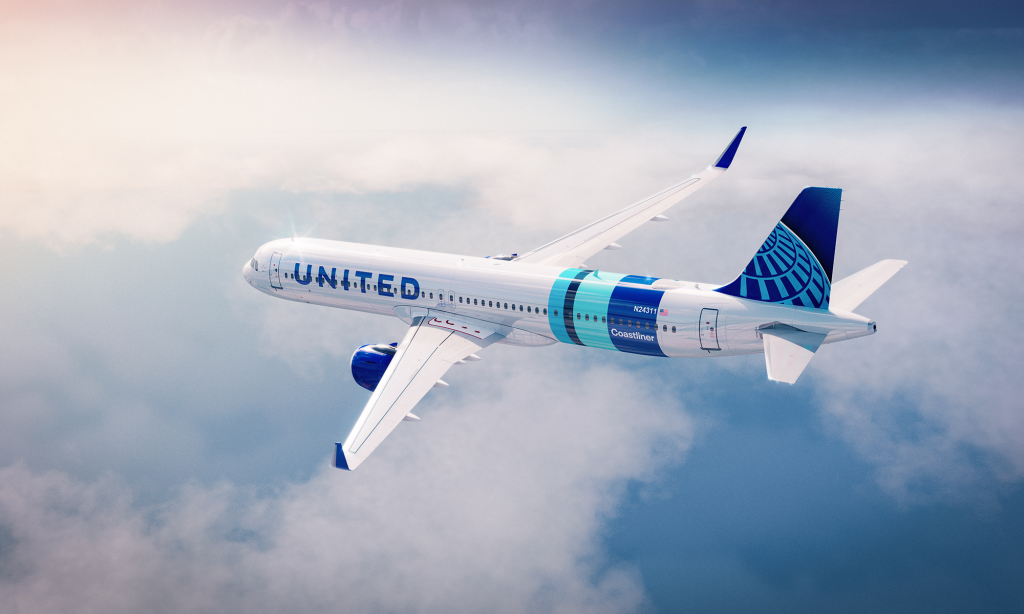

Lie-flat domestic seats, next-generation cabins and upgraded regional jets are the headline-makers of United Airlines new fleet upgrade.
The airline has announced it is planning to ramp up its premium offer by adding more than 250 aircraft by 2028, alongside a wave of new onboard products spanning long-haul, transcontinental and regional travel.
While the scale of the fleet expansion is significant, the airline’s latest announcement places clear emphasis on the passenger experience, with new seats, upgraded cabins and enhanced amenities across every class.
CEO Scott Kirby said: “We are accelerating our plans and elevating our offerings to the next level, creating an even more consistent, premium onboard experience for every customer and delivering value across every cabin of service.”
Premium goes domestic with ‘Coastliner’
A standout development is the introduction of the Airbus A321neo “Coastliner” subfleet, designed specifically for high-volume transcontinental routes between San Francisco, Los Angeles and Newark/New York.
For the first time, United is bringing its long-haul United Polaris Business Class product to domestic flying, with all-aisle access lie-flat seats and access to United Polaris lounges included.
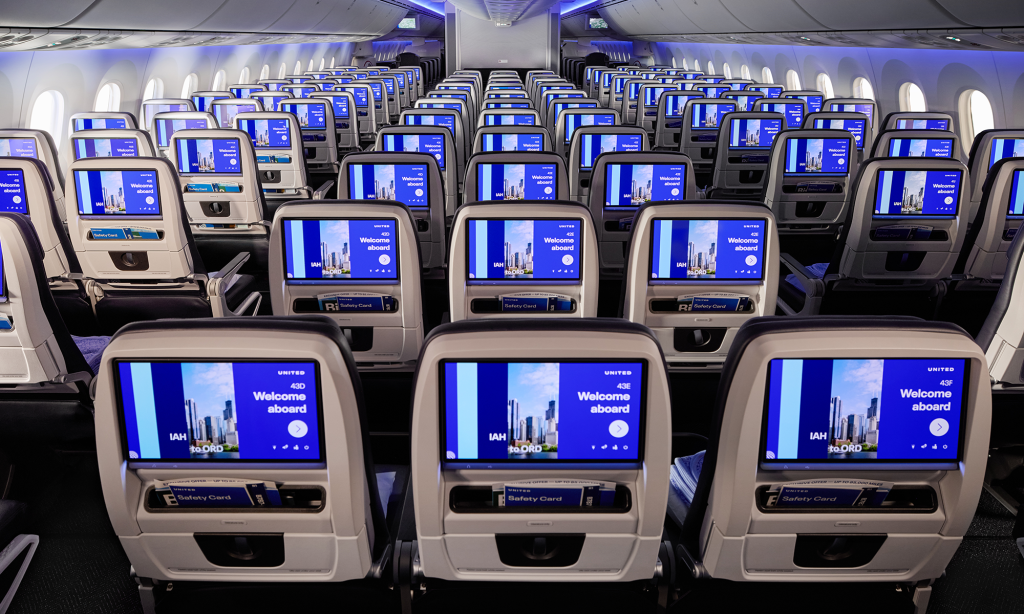
The aircraft will feature 20 Polaris suites, 12 United Premium Plus seats – a first for narrowbody domestic routes – and 129 Economy seats. A new self-service snack bar in the rear of the cabin will allow Economy passengers to access refreshments throughout the flight.
Passengers in Polaris will receive an experience aligned with international travel, including Saks Fifth Avenue bedding, upgraded amenity kits and premium headphones.
Narrowbody aircraft, widebody experience
United is also introducing the Airbus A321XLR, which will replace Boeing 757s on select routes to Europe and South America from later this year.
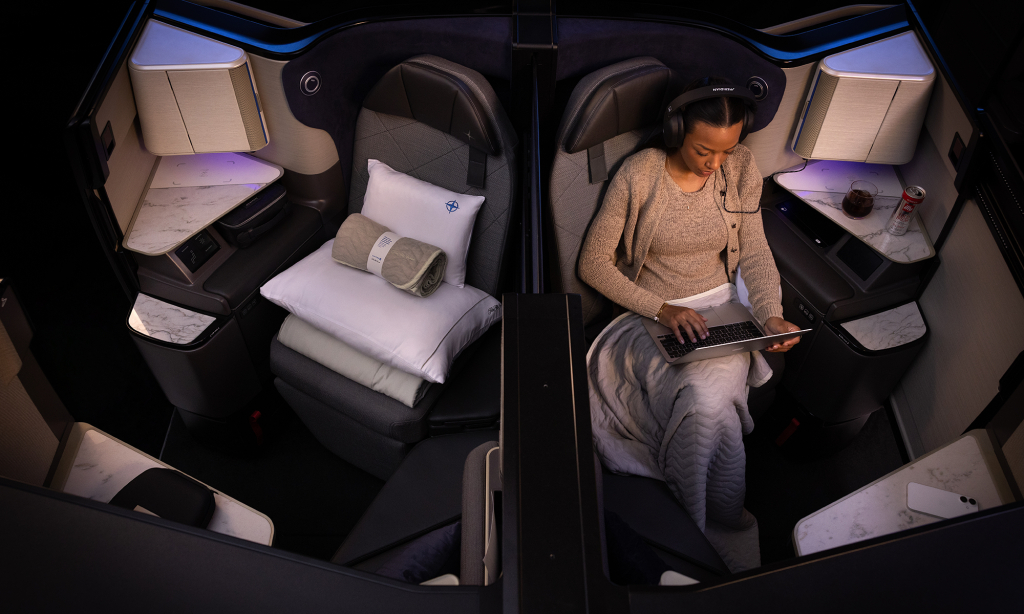
Configured with 32 premium seats – double that of the 757 – the aircraft features lie-flat Polaris suites with privacy doors and 4K OLED seat-back screens across all cabins. Bluetooth connectivity and larger overhead bins are also standard, alongside a rear snack bar.
The move reflects a broader trend towards delivering widebody-style comfort on smaller, more flexible aircraft.
Chief Commercial Officer Andrew Nocella said the new aircraft will “give our customers more premium amenity and seat choices” across both short- and long-haul journeys.
‘Elevated’ long-haul experiences
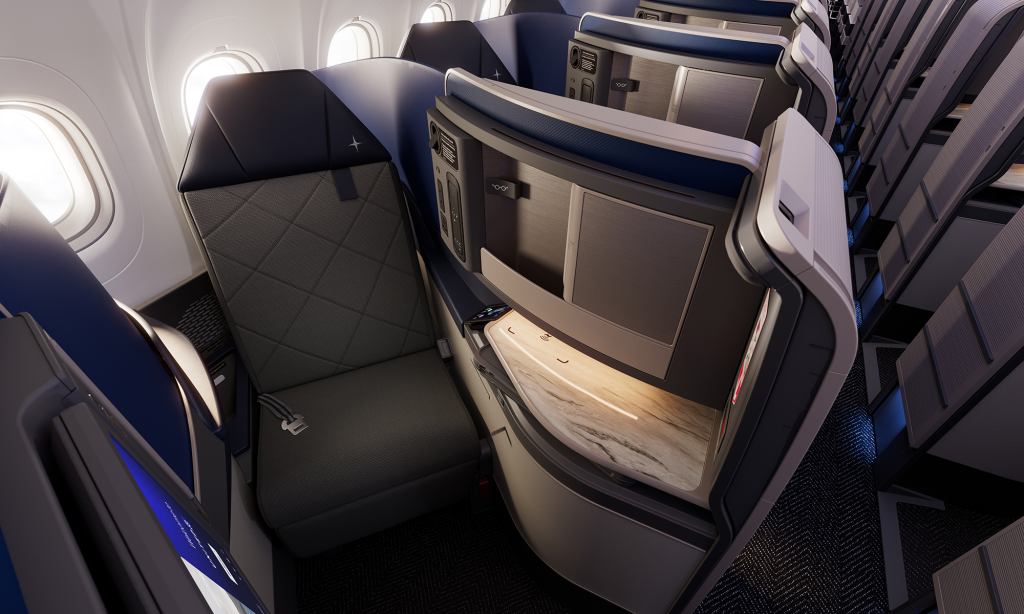
On the long-haul side, United’s new Boeing 787-9 with the ‘Elevated’ interior was due to enter international service on April 22, featuring the debut of United Polaris Studio suites.
These seats are 25% larger than standard Polaris, with privacy doors, companion ottomans on selected seats, wireless charging, Bluetooth connectivity and a 27-inch 4K OLED screen – the largest offered by a U.S. carrier.
The upgraded experience also includes enhanced dining, with caviar service and curated wine pairings, as well as new amenity kits with retail-sized products.
Across the aircraft, all cabins benefit from updated seating and larger, high-resolution screens.
Regional rethink with CRJ450
United is also targeting improvements at the regional level with the introduction of the 41-seat CRJ450, designed to offer a more premium, private jet-style experience.
In a notable design shift, overhead bins have been removed in the United First cabin and replaced with a dedicated luggage closet, with the aim to create a more spacious feel. Economy passengers will benefit from larger bins than typically found on regional aircraft.
Connectivity is also a key feature, with free Starlink Wi-Fi available for MileagePlus members.
More choice, more connectivity
Alongside new aircraft, United is investing in onboard amenities across the fleet. Plans include rolling out Starlink Wi-Fi across dual-cabin aircraft by 2027, expanding seatback screens to more than 1,200 aircraft, and upgrading soft products such as blankets, earbuds and food and beverage options.
The airline is also continuing to enhance its digital ecosystem, with app features including real-time updates, wayfinding and integrated bag tracking.
CEO Kirby said the investments build on years of product development: “For more than a decade, we’ve invested billions of dollars in our product, service, and technology… and the result is that more and more customers are choosing to fly with us every day.”